Mastering Clothing Measurements is the backbone of successful apparel development. Whether you’re a fashion creator, a startup brand, or an established producer, mastering estimations ensures your garments fit accurately, look professional, and remain stable throughout each production run. In today’s competitive fashion showcase, precision is not optional—it’s a non-negotiable necessity that influences costs, timelines, and client satisfaction.
For brands working with Clothing Manufacturers in the USA, having precise measurements supported by a Technical Drawing and Tech Pack is fundamental for smooth communication and immaculate execution. At techpack.us, we help brands bring clarity and precision to their techpacks, estimation specs, and production processes.
This blog covers everything you need to know about mastering clothing measurements—from industry-standard techniques to best practices used in professional clothing manufacturing.
Why Clothing Measurements Matter
Clothing measurements form the foundation of each garment. When these measurements are wrong, the whole generation handling can collapse. Poor estimations lead to off-base measuring, wasted materials, generation delays, and customer dissatisfaction.
Accurate measurements unravel these problems by:
- Ensuring reliable measuring over distinctive styles
- Improving garment fit and comfort
- Reducing the number of prototypes and revisions
- Making the Tech Pack Case more proficient and reliable
- Helping producers understand your desires clearly
Well-executed measurements, moreover, make your Tech pack more important since manufacturers depend on these details to cut, fasten, and finalize each piece.
Understanding Key Clothing Measurement Terms
Before plunging deeper, it’s critical to get familiar with the most vital measurement terms utilized in the industry. These terms show up in each proficient techpack and are utilized by Clothing Manufacturers in the USA and globally.
Body Measurement
These measurements are taken directly from the human body. They incorporate chest, bust, waist, hip, inseam, out seam, rise, bicep, shoulder width, and more.
Garment Measurements
Garment measurements are taken from a wrapped-up item lying level. They ordinarily contrast somewhat from body measurements to guarantee comfort, movement, and fit.
Examples include:
- Garment chest width
- Garment waist width
- Sleeve length
- Front and back rise
- Bottom opening
- Shoulder-to-shoulder
Tolerance
Tolerance is the allowable deviation from a measurement. For example, a chest width of 20″ may allow ±0.5″. This ensures realistic desires for mass generation.
How Clothing Measurements Fit Into the Tech Pack
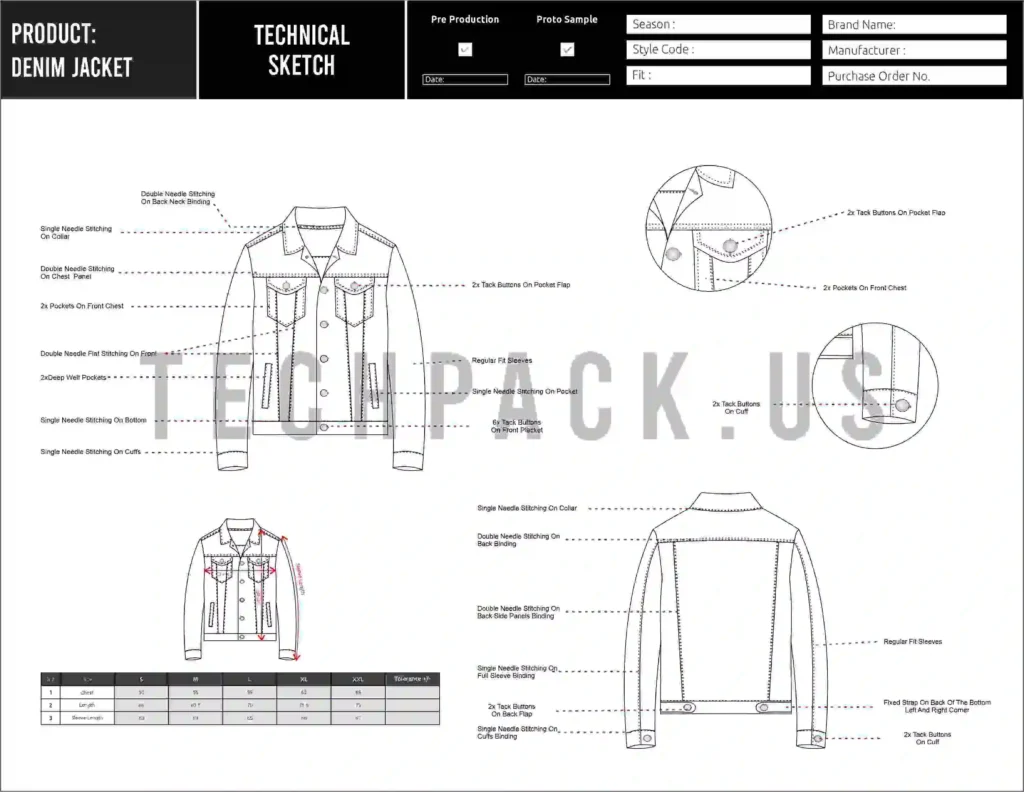
A Technical drawing and tech pack isn’t complete without a properly organized measurement sheet. This sheet incorporates all basic measurements for each measure you arrange to produce.
A strong measurement sheet includes:
- Clear measurement names
- How-to-measure diagrams
- Total estimation values for each size
- Tolerance for each measurement
- Grading increments
A well-prepared measurement sheet decreases errors by up to 70%, according to many Clothing Manufacturers in the USA, since it eliminates mystery.
Taking Accurate Body Measurements: Step-by-Step Guide

If you’re measuring a show or yourself, accuracy is fundamental. Here’s how to measure like a professional:
- Chest / Bust
Wrap the tape around the fullest portion, ordinarily over the nipples. Keep the tape straight and snug.
- Waist
Measure around the normal waistline, located fairly over the belly button.
- Hips
Measure around the widest portion of the hips, typically around the situate area.
- Shoulder Width
Measure from the edge of one bear bone to the other.
- Sleeve Length
Measure from the bear crease down to the wrist bone.
- Inseam
Measure from the groin seam down to the ankle bone.
- Outseam
Measure from the waistline down to the ankle or craved length.
- Rise
Measure from the front waistline, through the crotch, up to the back waistline.
These exact numbers will inevitably be exchanged into your techpack and afterward expanded into full-size measurements through reviewing.
How to Measure Finished Garments (Essential for Tech Packs)
If you’re creating a Tech Pack Example based on an existing garment you adore, you’ll need to degree it accurately.
Here’s how to do it:
- Measure Chest Width
Lay the garment flat. Measure from armpit to armpit, then twofold the measurement if needed.
- Measure Garment Length
Measure from the bear seam down to the hem.
- Sleeve Length
Measure from the bear crease to the sleeve opening.
- Bottom Opening
Measure straight over the sew, then double.
- Neck Opening
Measure along the crease, not around the opening
- Shoulder Width
Measure straight over the beat crease from one bear point to the other.
These garment estimations are included in your Tech pack to help manufacturers replicate your test superbly.
Grading: Scaling Measurements for All Sizes
A professional clothing brand doesn’t measure only one size—they produce multiple sizes. Grading is the process of mathematically increasing or decreasing measurements between sizes.
Example (Typical T-shirt Grading):
| Measurement | Small | Medium | Large |
|---|---|---|---|
| Chest Width | 19″ | 20″ | 21″ |
| Body Length | 27″ | 28″ | 29″ |
| Sleeve Length | 8″ | 8.25″ | 8.5″ |
Grading rules depend on:
- Fabric stretch
- Garment style
- Target market
- Fit preference
This step is crucial in Clothes Manufacturing and must be clearly stated in your techpack.
Common Measurement Mistakes to Avoid
Even skilled designers sometimes make measurement mistakes. Here are common errors you should avoid:
Guessing measurements
Always degree accurately or use a standard measure chart.
Measuring while the garment is not flat
This leads to erroneous numbers.
Forgetting tolerance values
Manufacturers require a margin of error.
Inconsistent measurement methods
Use the same strategy each time.
Not checking shrinkage
Important for cotton, denim, downy, and knitwear.
Mistakes like these can cost time and money during generation.
Why Clothing Measurements Must Match Your Technical Drawing

Each Technical drawing and tech pack incorporates visual instructions, but the measurement sheet gives manufacturers mathematical clarity. If your drawings and estimations don’t coordinate, your generation team will struggle.
Consistency ensures:
- Accurate test development
- Fewer revisions
- Better communication with Clothing Manufacturers in the USA
- Faster generation cycles
At techpack.us, we always coordinate drawings with correct measurements so generation teams receive culminate instructions.
How Accurate Measurements Improve Clothes Manufacturing
When your measurements are:
- Clear
- Detailed
- Consistent
- Professionally structured
Manufacturers can produce garments that match your expectations exactly.
Accurate measurements can:
- Reduce sampling costs
- Improve delivery times
- Ensure consistent quality
- Increase customer satisfaction and repeat orders
- Boost brand credibility
In short, Mastering Clothing Measurements is your entire Clothes Manufacturing pipeline.
A Sample Tech Pack Example with Measurement Focus
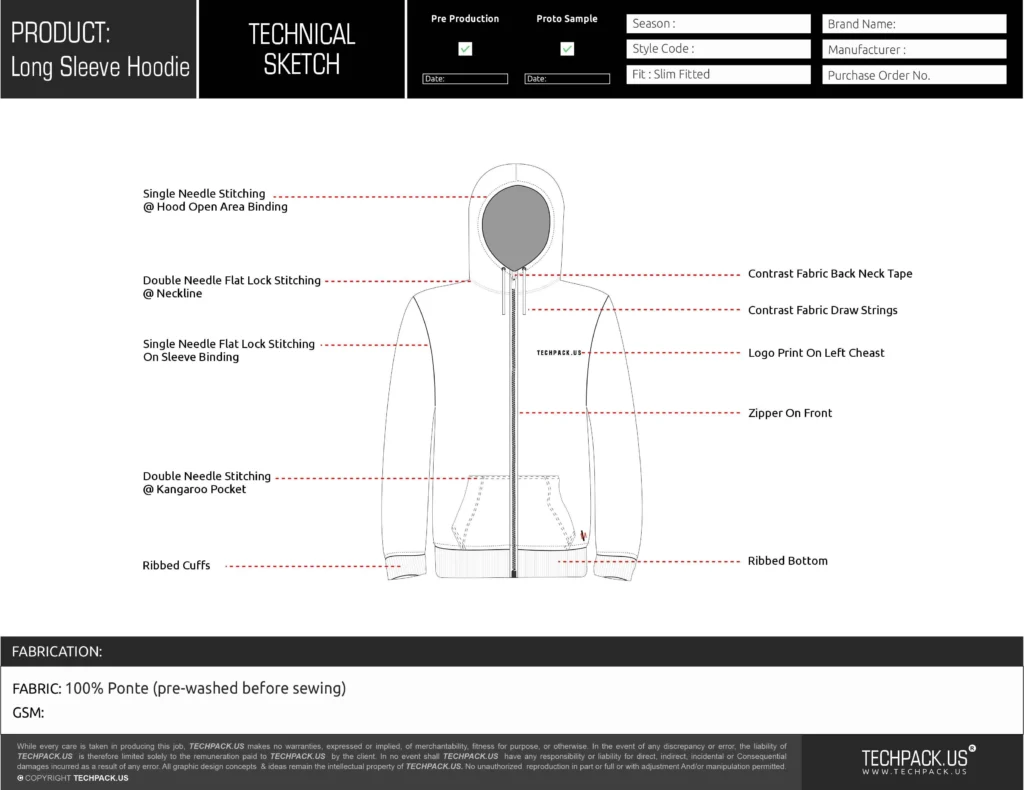
A high-quality Tech Pack Example includes:
- Front & back technical drawings
- Measurement chart for all sizes
- Construction details
- Stitching instructions
- Fabric details
- Trims and accessories
- Tolerance values
- Notes for manufacturers
This is what major Clothing Manufacturers in the USA expect from professional brands.
Final Thoughts: Mastering Clothing Measurements
Mastering Clothing Measurements is not fair a technical skill—it’s a brand-building strategy. Whether you’re a new designer or a well-established label, exact measurements secure your speculation, decrease mistakes, and improve the overall quality of your garments.
At techpack.us, we specialize in building proficient techpacks that include world-class measurements, technical drawings, and manufacturing-ready details.
If you need your clothing line to see and fit superbly, taking measurements is the to begin with and most important step.
FAQs: Mastering Clothing Measurements
- Why are exact measurements so important in a techpack?
Manufacturers depend on correct estimations to create garments accurately. Without exact numbers, the chance of mistakes and destitute fit increments significantly.
- Do Clothing Manufacturers in the USA follow standard measurement charts?
Yes, most use standard charts, but giving your possess guarantees your garments match your brand’s fit and style.
- What’s the contrast between body and garment measurements?
Body measurements are taken from the wearer; garment measurements are taken from the item itself. Both are basic for exact sizing.
- Should each size have its own claim measurement chart?
Yes. Each measure must include evaluated measurements to keep up exact proportions across sizes.
- Can I make a techpack without measurements?
No. A techpack without measurements is incomplete and will cause generation issues.